At Oregon Neurofeedback, Infra-Low Frequency (ILF) Neurofeedback supports high-performing individuals, athletes, and those seeking greater consistency, resilience, and balance.
How It Works
How It Works
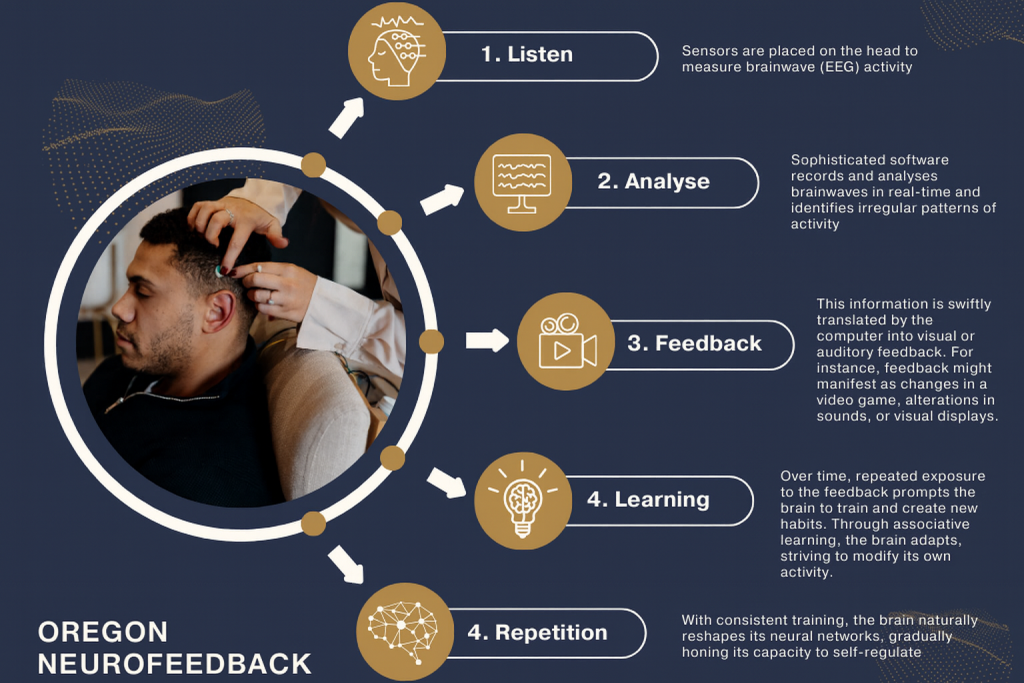
How ILF Neurofeedback Works
Our process begins with a comprehensive consultation to understand your unique needs, goals, and challenges. We use a structured assessment to identify the optimal starting sites for neurofeedback training, ensuring that each session targets the areas of your brain that will benefit most. This personalized approach allows us to create a focused, effective plan for improving brain regulation, resilience, and overall well-being.
ILF brain training is a gentle, non-invasive method that helps the brain self-regulate through a form of classical conditioning. With consistent sessions—typically 20 to 40—clients can experience lasting improvements in focus, emotional balance, sleep, and overall mental resilience.
After completing ILF brain training, clients are ready to begin Synchrony and Alpha-Theta training, which build on the foundation of self-regulation established through ILF. These advanced sessions support deeper emotional processing, creativity, and spiritual growth, helping individuals achieve lasting transformation, greater resilience, and a renewed sense of peace and well-being.
Evidence & Research
Our work is informed by a growing body of peer-reviewed research examining Infra-Low Frequency (ILF) neurofeedback and its relationship to brain regulation, attention, and performance-related functions. The studies below reflect current research relevant to high-demand performance and cognitive regulation contexts.
🧠 Focus & Precision in Sport
Study: The effect of infra-low frequency neurofeedback training on pistol shooting performance and attention in semi-skilled players
Authors: Bakhtafrooz, Kavyani, Farsi, Alboghebeish
Journal: Frontiers in Human Neuroscience (2025)
Research summary:
This study examined the effects of ILF neurofeedback training and found outcomes associated with changes in attention networks and shooting performance, suggesting potential relevance for focus, precision, and performance under pressure.
Citation:
Bakhtafrooz et al., 2025. Frontiers in Human Neuroscience.
⚡ Cognitive Function & Regulation
Study: Infra-low frequency neurofeedback impact on post-concussive symptoms: Results of a randomized controlled trial
Authors: Carlson et al.
Journal: Explore: The Journal of Science and Healing (2025)
Research summary:
In this randomized controlled trial, ILF neurofeedback was associated with changes in attention, sleep quality, and self-reported quality-of-life measures, highlighting its potential role in supporting nervous system regulation.
Citation:
Carlson et al., 2025. Explore.
🔬 Neural Regulation & Stability
Study: Infra-Low Frequency Neurofeedback: A Systematic Mixed Studies Review
Publication Year: 2025
Research summary:
This review evaluated multiple ILF neurofeedback studies and identified consistent patterns related to neural regulation, attention, and cognitive functioning, supporting continued investigation across clinical and performance-related settings.
Citation:
Systematic Mixed Studies Review, 2025.
🏃 Neurofeedback in Athletic Training
Study: The Use of Neurofeedback in Sports Training: A Systematic Review
Journal: Brains (MDPI, 2023)
Research summary:
This review examined a range of neurofeedback approaches and found findings suggesting potential benefits for motor coordination, attentional processes, and performance outcomes in athletes across multiple sports.
Citation:
Brunetti et al., 2023. Brains.
Research in ILF neurofeedback is ongoing. Findings described above reflect research observations and do not imply guaranteed outcomes. Individual responses may vary.
At Oregon Neurofeedback, we integrate insights from this research with individualized, non-medical neurofeedback training focused on supporting nervous system regulation.